
Custom Flyer, Brochure & Booklet Printing in China
Printed marketing materials built around your brand, content and campaign.
Runsheng Printing produces custom flyers, folded brochures and bound booklets for brands, marketing agencies, business buyers and print resellers. Choose the size, paper, printing, construction and finishing that suit the way your materials will be presented and distributed.
From a product launch handout to a detailed company booklet, send your artwork or project brief with the quantity for each item. We will review the specifications and prepare a project-specific quotation.
Request a Printing Quote · Discuss Your Project on WhatsApp
Established in 1956 · Custom sizes and finishing · International B2B support
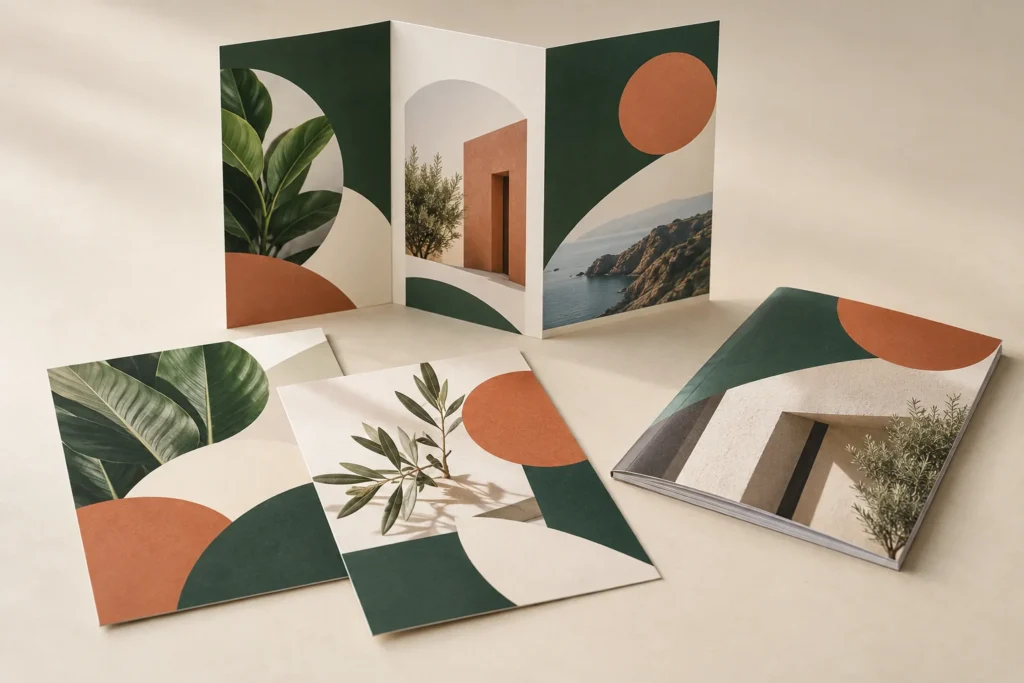
Find the Right Format for Your Content
Start with what the reader needs to understand and how the printed piece will reach them.
Custom Flyer Printing
Single-sheet flyers and leaflets for promotions, trade show handouts, retail displays and packaging inserts. Print on one or both sides, with a standard or custom finished size. Include the intended distribution method so that the paper and packing can be assessed for the actual use.
Custom Brochure Printing
Folded sheets for company introductions, product overviews and service information. A brochure gives your content a reading sequence while keeping the finished piece compact. Specify the fold style and both the open and closed dimensions; the name “tri-fold” alone does not describe every production detail.
Custom Booklet Printing
Multi-page publications for company profiles, product catalogs, instruction guides and event programs. Saddle stitching or perfect binding can be reviewed against the page count, paper and intended handling. Supply the cover and interior requirements separately when they use different stocks or finishes.
Choosing a format? Send a reference photo, a previous printed piece or a rough content outline. Tell us which dimensions and features are essential to your project.
Confirm Size, Folds and Page Count
A clear construction brief makes quotations easier to compare. Use dimensions and a reference layout alongside product names.
| Format | Construction to describe | Details needed for the quote |
|---|---|---|
| Flat flyer | One unfolded sheet | Finished size, printed sides and paper |
| Half-fold brochure | One sheet folded into two panels on each side | Open size, closed size and reading direction |
| Tri-fold brochure | One sheet with three panels on each side, folded inward | Fold order, panel widths and outside/inside artwork |
| Z-fold brochure | Three panels with alternating folds | Open size, panel layout and reading sequence |
| Bound booklet | Ordered pages held together by a binding | Finished size, cover and interior page counts, binding |
Common formats include A4, A5, DL and US Letter, alongside custom dimensions. Explain whether a quoted size refers to the flat sheet or the finished piece after folding.
A three-panel brochure printed on both sides has six panels, but it is still one folded sheet. Calling it a “six-page brochure” without explaining the construction can leave important details unclear.
For standard saddle-stitched booklets, plan the page count in multiples of four. If the cover uses a different stock, describe the components explicitly, such as 20 interior pages plus 4 cover pages, rather than giving only a combined total.
Confirm folding templates before placing artwork across panels. Inward-folding designs may require a narrower tuck-in panel; use the production team’s dimensions for your chosen stock and construction.
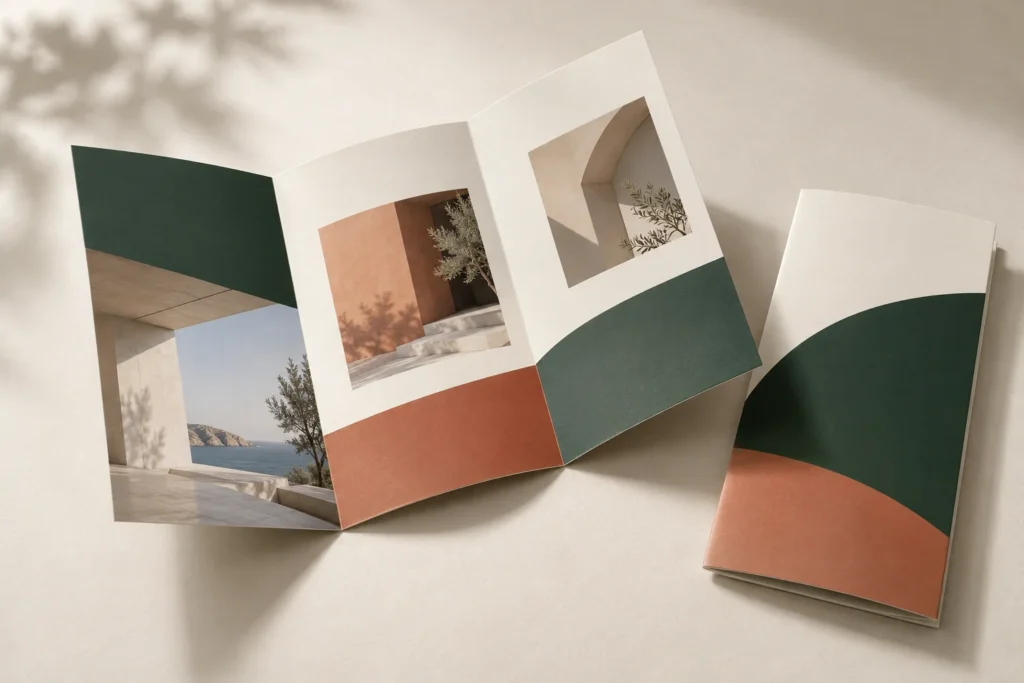
Choose Paper, Color and Finishing
Paper for the Intended Use
Consider the surface, thickness, handling and distribution method alongside paper weight. A flyer placed inside a product carton has different requirements from a booklet passed between sales teams.
Coated, uncoated and specialty stocks can be discussed for the project. For booklets, specify the cover and interior papers separately. Review samples if texture, writing suitability or the feel of the piece is important.
Brand Color and Print References
Tell us whether the design uses process color, named spot colors or an existing printed reference. Share brand guidelines and identify the elements that need particular attention.
Paper and surface treatments affect the appearance of color. Agree on the proofing method and approval reference before production, especially when several materials belong to the same campaign.
Finishing That Supports the Design
Options for review include matte or gloss lamination, soft-touch finishes, foil stamping, Spot UV, embossing, debossing, die-cutting and perforation.
Mark the intended finishing areas in the artwork and explain how the piece will be handled. Combining processes requires a review of the stock, construction and design; discuss the proposed treatment before preparing final files.
Discuss Paper and Finishing Options
Manufacturing Checks for Your Marketing Materials
Runsheng Printing was founded in 1956. For a commercial print project, the approved files and product specification provide a practical reference for production and inspection.
Important points to agree on include:
- Artwork version: correct language, images, page order, product information and approved file names.
- Print appearance: agreed paper and color references, image reproduction and finishing placement.
- Trim and folds: finished dimensions, fold direction, panel alignment and the position of content near edges.
- Booklet construction: page sequence, cover alignment, binding condition and the opening behavior reviewed in sampling.
- Packing: correct versions, quantities per bundle or carton, labels and protective arrangements.
Keep important text away from trim and fold areas using the approved safe margins. If you have inspection tolerances or acceptance criteria, provide them with the brief so that their feasibility can be reviewed.
Approve translated copy, contact details, URLs and any QR codes in your supplied artwork. These content checks belong alongside the visual approval of the printed piece.
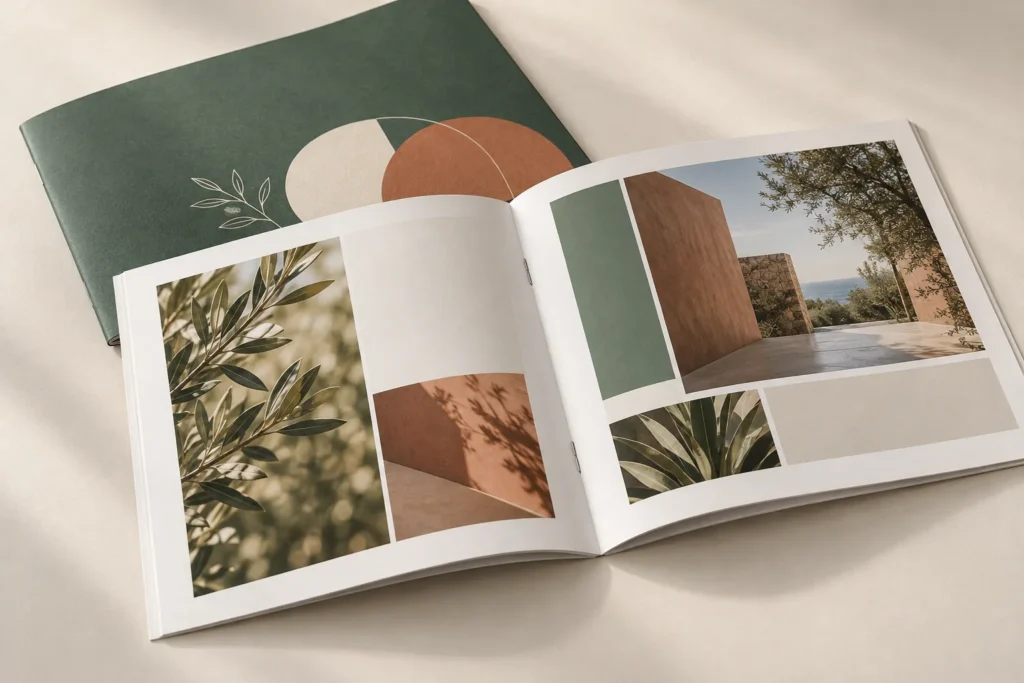
One Campaign, Several Printed Items
A launch or exhibition may need a short flyer, a folded product overview and a longer sales booklet. Provide an item list showing the specification and quantity for each piece so that the production plan can be reviewed together.
For multilingual or regional versions, use clear version codes and separate approved files. State whether content, dimensions, paper or finishing change between editions. A combined order quantity does not show how many copies are needed for each version.
Plan the delivery packs around their recipients. Identify whether bundles should contain one item, several coordinated pieces or a specific mix for each location. Include any reseller labeling or neutral outer packing requests for agreement before production.
For time-sensitive events, give the date and location where the materials must be available. Allow the schedule to include artwork approval, proofing, production and transport to that destination.
From Your Artwork to Finished Print
- Send the brief. Share the product types, dimensions, folds or binding, paper, printing, finishing, quantities and destination.
- Review specifications and quotation. Resolve material and construction choices, packing requirements and the proposed delivery basis.
- Confirm file preparation. Agree on the PDF setup, bleed, safe areas, fold templates and any separate finishing artwork.
- Approve proofs or samples. Confirm what the selected proof or sample will demonstrate, together with its cost and timing.
- Print, finish and inspect. Production proceeds against the approved files, specification and agreed inspection requirements.
- Pack and arrange delivery. Confirm version labels, quantities, carton details and shipment arrangements.
If your artwork is still being developed, say which decisions are already fixed. A reference sample or preliminary PDF can help clarify the brief before final files are prepared.
Flyer, Brochure and Booklet Printing FAQs
What is the difference between a flyer, brochure and booklet?
Here, a flyer is a single sheet, a brochure is a folded sheet, and a booklet is a bound multi-page publication. Terminology varies between markets, so send the actual construction and dimensions even if you call the piece a leaflet or pamphlet.
Which brochure fold styles can you produce?
Half-fold, tri-fold, Z-fold, gate-fold and roll-fold projects can be reviewed. Include the panel arrangement and reading direction, then confirm a production template for the chosen paper before completing the artwork.
Does the booklet page count include the cover?
State this explicitly in the brief. If the cover differs from the interior, give both counts and their paper specifications. For a standard saddle-stitched piece, the assembled page count needs to work in four-page units.
Can you work with our brand colors?
Send your brand guidelines, spot color references if required, and any existing printed sample. The team can discuss the production and proofing approach. Confirm the approval reference rather than relying only on a screen preview.
What artwork should we supply?
A print-ready PDF is a useful starting point. Confirm the required color setup, image resolution, fonts, bleed and safe margins with the production team. For booklets, confirm the page export arrangement; for brochures, use the approved fold template.
Can one order contain different items or languages?
Yes. Provide a breakdown of the quantity and specification for each item and version. Use clear file names and explain any mixed-pack requirements so that the order can be reviewed and identified correctly.
What is your minimum order quantity?
Production requirements depend on the size, stock, printing, construction, finishing and number of versions. Send the quantity per item and design for a feasibility review and quotation.
Can we review samples before placing the production order?
Discuss digital proofs, paper or finishing samples, folding mockups and physical sample options. Their purpose, availability, charges and timing are confirmed for the project. A layout proof and a finished production sample assess different details.
How long will printing and delivery take?
Timing is confirmed after the specifications, quantities, artwork and sampling requirements are reviewed. Provide the required arrival date and destination, particularly for exhibitions, launches and other scheduled events.
Can materials be packed for resale or separate distribution?
Share the quantities per bundle, carton identification and any neutral packing or reseller label requirements. These arrangements need to be confirmed with the order, along with destination details and shipment scope.
Request Your Custom Printing Quote
Send a short brief if you are still choosing the format. For a more detailed quotation, include:
- Product types and quantity per item, design or language version.
- Finished dimensions and, for folded pieces, the open and closed sizes.
- Printed sides or booklet cover and interior page counts.
- Paper requirements, fold style or binding construction.
- Printing colors, finishing areas and any reference samples.
- Packing quantities, version labels and distribution requirements.
- Destination, preferred trade term if known, and required arrival date.
- Available PDFs, artwork, brand guidelines or specification sheets.
Jessie Mou — International Sales Director
Email: Jessiemou.26@gmail.com
Phone / WhatsApp: +86 155 6250 1902
Request a Printing Quote · Talk to Jessie on WhatsApp
Planning a more extensive publication? Explore Book Printing and share the full project specification.