
Choose the Right Materials and Construction for Your Book
The right book specification connects appearance, reading experience, durability and cost. Paper affects how pages look and feel. Binding determines how the book opens and holds together. Cover finishes add texture, protection and visual detail.
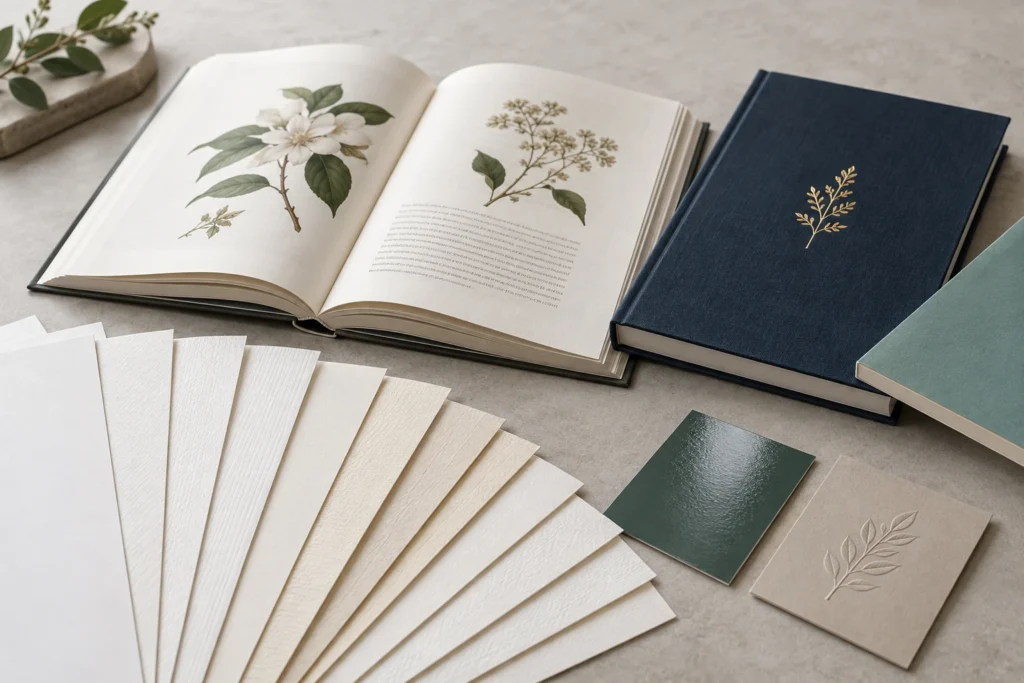
Runsheng Printing helps international publishers, education companies, authors and brands develop practical specifications for custom book production in China. Bring us a working brief, an existing book or an idea you would like to explore. We can help you compare suitable materials and construction options before you finalize the artwork and place your printing order.
Discuss Your Book Specification · Talk to Jessie on WhatsApp
Start With How Your Book Will Be Used
A novel, a classroom workbook and a presentation book have different priorities. We begin with your content, readers and intended use, then consider the format, production quantity, budget and delivery requirements together.
| Your project priority | Choices we can help you review | What to assess before approval |
|---|---|---|
| Comfortable reading | Paper shade, surface, opacity and page flexibility | Representative text pages and show-through |
| Detailed illustrations or photography | Paper surface, shade and printing approach | Representative images on an appropriate proof or sample |
| Writing and practical use | Writable paper, binding and working margins | Pen or pencil performance and access near the binding |
| Repeated handling | Book block construction, cover materials and surface protection | Opening behaviour and durability requirements |
| Distinctive presentation | Hardcover materials, foil, embossing and other finishes | Physical references, finish placement and compatibility |
| Manageable production and delivery cost | Paper weight, format, binding and finishing scope | The complete quotation, finished weight and packing plan |
Tell us which priorities matter most. This helps us explain the trade-offs between options and focus the comparison on your project.
Paper Selection for Readability, Images and Feel
We can help you assess interior paper, cover stock and endpapers as parts of the same book.
For interiors, the discussion may include:
- Surface: Coated paper can support crisp image reproduction, while uncoated paper offers a different texture and appearance. For workbooks, we also consider writing performance with the intended pens or pencils.
- Shade: White and cream papers change the overall look of the page and how artwork appears against the background.
- Weight and thickness: GSM describes mass per unit area. Actual thickness, also called caliper, needs separate consideration because papers with the same GSM can produce different book thicknesses.
- Opacity: Show-through can affect double-sided reading, particularly where dense images sit behind light text areas.
- Grain and flexibility: Paper direction and stiffness need to work with the folds, binding and opening requirements.
For covers and endpapers, we review their role in the construction alongside the desired appearance. A flexible paperback cover and a paper wrap over hardcover board serve different purposes.
If you already have a paper specification, share the grade, weight, shade, surface and any available technical information. A physical sample is especially useful when texture or thickness matters. We can review suitable sourcing options and identify differences that need your approval.
Binding Recommendations Based on the Complete Book
Binding suitability depends on the finished size, page count, paper, expected handling and desired opening behaviour. We review these together when discussing construction.
Perfect-bound paperbacks: A practical option for many novels, manuals and commercial publications. We assess the book block thickness, paper and adhesive binding requirements for the proposed edition.
Sewn book blocks: Folded sections are joined with thread as part of the construction. Sewing can be considered for books intended for repeated use, with the final result depending on the paper, section arrangement and complete binding structure.
Hardcover or case binding: We discuss cover board, wrapping material, endpapers, spine and hinges alongside the book block. A hardcover describes the outer construction; the pages inside may use different attachment methods, which should be specified separately.
Saddle stitching: Suitable for many thin booklets and short publications. Feasibility needs a review of the page count, paper thickness, size and folding plan.
Spiral and related punched bindings: Useful options to discuss for workbooks, planners and practical reference material. The punched area, page access and binding component need to suit the way the book will be used.
If the book must remain open for writing or display a continuous image across a spread, explain that requirement early. We can assess the construction and sampling needed to evaluate it. A physical dummy can help demonstrate the proposed opening behaviour.
Cover Finishes That Work With Your Design
We help you consider both the visual effect and the production requirements of a finish.
Lamination and Surface Protection
Matte and gloss lamination create different levels of reflection and a different surface feel. Where a soft-touch effect is requested, we can assess suitable options and their compatibility with the project.
We also discuss handling conditions, dark printed areas, folding and any additional decoration. The level of scuff resistance or surface protection should be assessed against an agreed material or sample.
Foil Stamping
Foil can highlight a title, logo or decorative element. We review the intended colour and effect, artwork detail, coverage, position and the surface receiving the foil. A physical reference helps communicate the result you want.
Embossing and Debossing
Raised or recessed details add a tactile effect. Their suitability depends on the artwork, material, tooling and surrounding construction. Fine lines, small text and areas near folds or hinges need particular attention.
Spot UV and Combined Effects
Spot UV can create a selective gloss effect. If your design combines it with lamination, foil or other decoration, we review material compatibility, production sequence and alignment expectations.
We can coordinate the agreed finish with your Book Cover & Jacket Design and Prepress & Print-Ready File Preparation, including the production template and separate finishing artwork where required.
Compare Options Against Your Budget and Schedule
A material change can affect several parts of the order. Thicker paper may change the spine width, cover dimensions, finished weight and packing quantity. Additional finishes may require tooling, preparation and sampling time.
We can help you compare clearly defined alternatives, such as two interior papers or a paperback and hardcover edition. Each quotation should identify the specification and delivery scope used for that option.
If the budget is fixed, tell us which features are essential and where you are flexible. For international orders, we can also review the implications for Packing & Shipping Coordination.
How Our Consultation Process Works
1. Share Your Brief and References
Send the details you have, representative artwork and any existing book or material samples. Mark undecided items so we can focus on them.
2. Review Suitable Options
We discuss material and construction choices, their practical differences and any points that require physical evaluation. Availability and production feasibility are checked for the proposed order.
3. Agree Sampling Where Needed
Depending on the decision, we may recommend paper swatches, an existing reference, a blank dummy or a printed and finished sample. We confirm the purpose, materials, cost and timing before proceeding.
4. Confirm the Specification and Quotation
The selected paper, binding, cover construction and finishes are recorded for your review, together with agreed references and any critical requirements.
5. Coordinate Artwork and Production Approval
The final artwork must match the approved materials and construction. Changes to paper, page count or binding may require a revised cover template and another approval before production.
Learn more about Proofing & Sample Development for your project.
What to Send Us
For a useful initial discussion, please include:
- Book type, intended readers and how it will be used.
- Finished size, interior page count and colour requirements.
- Quantity for each title, version or edition.
- Existing paper, binding and finishing preferences.
- Representative pages, reference photographs or a physical book sample.
- Target budget, required arrival date and delivery destination.
- Essential features and choices you would like help making.
You can begin before every detail is settled. A clear description of the intended result gives us a starting point.
What You Can Expect From the Review
The agreed scope can include a proposed book specification, a comparison of alternatives, sampling recommendations and a quotation based on the selected option.
We clarify which decisions are confirmed and which depend on artwork review, sourcing or sample approval. Any design work, special sourcing, testing, tooling, samples or further revisions should be included in the agreed scope and pricing.
Frequently Asked Questions
Can you help if I do not know which paper or binding to choose?
Yes. Share the book’s purpose, size, page count, quantity and budget priorities. Representative pages or a reference book help us make the discussion more specific.
Can you match the materials in an existing book?
A physical book can guide the review. Exact matching depends on identifying and sourcing its materials. If an alternative is proposed, we explain the relevant differences and agree a reference before ordering.
Will heavier paper make my book better?
Paper weight is one factor. Reading comfort, opacity, thickness, flexibility and finished weight also matter. We help you evaluate them against the intended use.
Can I approve materials from photographs alone?
Photographs help communicate preferences, but physical samples are more useful for texture, stiffness, surface feel and reflective effects. We can recommend an appropriate review method for each decision.
Does a blank dummy confirm the final printed result?
A dummy can help assess size, thickness, handling and construction, depending on how it is made. Print colour, decoration and finish performance need appropriate separate references or samples.
Can I change the specification after receiving a quotation?
Yes. Tell us which items you want to change so we can review the effect on price, artwork, samples and timing. Confirm the revised specification and approval requirements before production proceeds.
Discuss Your Book With Runsheng Printing
Send us your brief, reference book or representative pages. Tell us what matters most, and we will help you develop a specification for your Book Printing project.
Request a Project Review · Explore All Services
Jessie Mou — International Sales Director
Phone / WhatsApp / WeChat: +86 155 6250 1902
Email: Jessiemou.26@gmail.com